
Seven hundred euros. That is the combined gap that the levers most Belgian drivers know by name, but have never seen costed, can create in a single year: a 50% gap between insurers, 10 to 20% with a connected box, up to 20% by bundling contracts. None of those percentages had yet been converted into euros on the same profile, let alone ranked from most to least profitable. That is what this article does.
How much can you really save on a Belgian car insurance premium?
It depends on the lever, and the gap between the first and the last is considerable. On this site's reference profile, a 35-year-old driver, VW Golf 1.5 TSI, living in Flemish Brabant, no claims for five years, around 15,000 km a year, whose full omnium premium runs around €1,135 a year, here is what each lever is actually worth.
| Lever | Annual gain on our profile | Main condition |
|---|---|---|
| Comparing 3 to 4 insurers | up to €567.50 | market gap of 50% already measured |
| Raising the deductible | up to €346.39 net | able to cover the amount if a claim occurs |
| Pay-per-kilometre formula | €227 to €454 | driving under 8,000 to 10,000 km a year |
| Bundling contracts | €56.75 to €227 | 3 to 4 contracts with the same insurer |
| Telematics box | €113.50 to €227 | driving score kept up |
| Not reporting a small claim | €280 from year one | damage below the cumulated surcharge |
| Declaring a young occasional driver | costs €52.95 a year | not a gain, a protection |
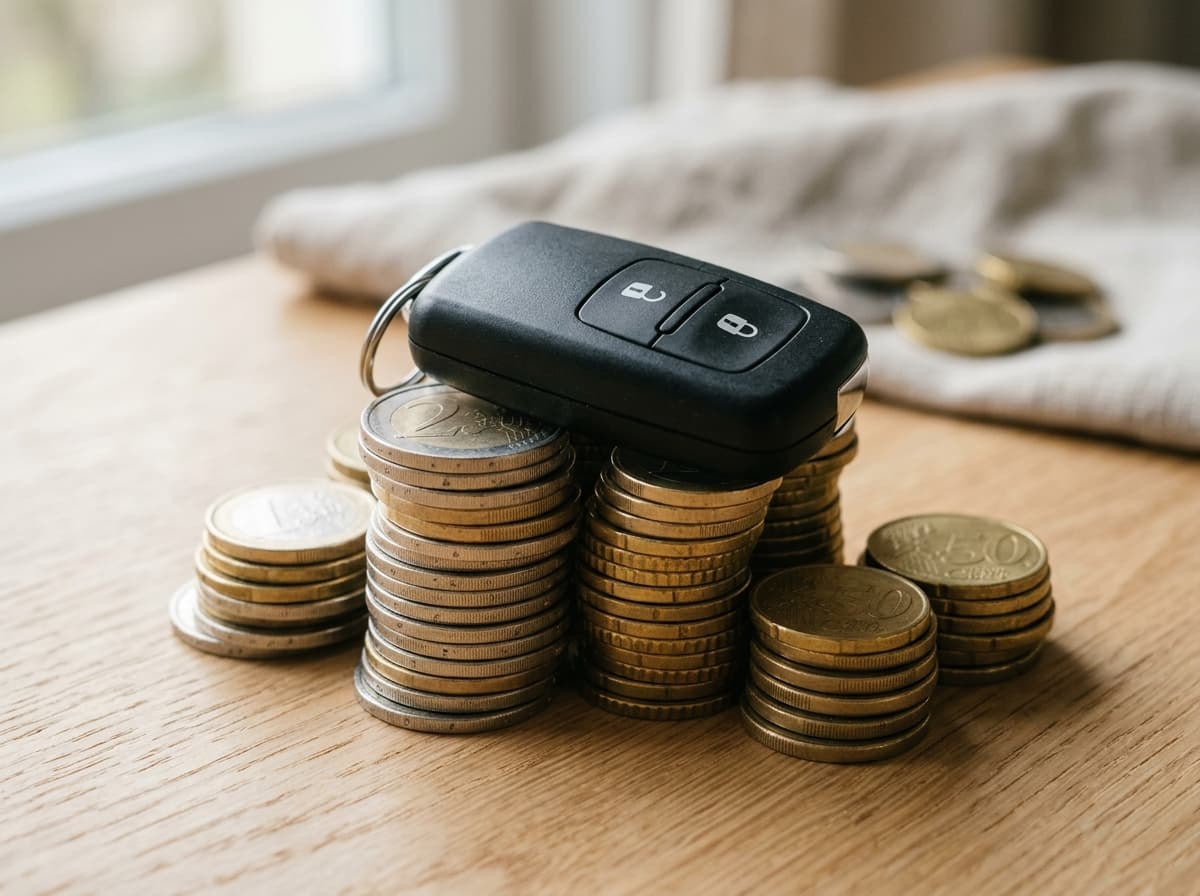
Two lines stand out. Comparing insurers remains, as on every other article on this site, the single most powerful lever on its own. And one line breaks the table's logic entirely: correctly declaring an occasional driver does not make money, it costs money. The sections below detail the two levers this site had never costed, bundling contracts and the occasional driver, then point to the calculations already published for the others.
A methodological note: every figure above is calculated on the same base, our omnium reference premium of €1,135, unless stated otherwise. A reader on liability-only cover at €353 can divide most figures by a little over three, since liability makes up roughly a third of the total premium on this profile.
Bundling contracts with the same insurer: how much does it actually pay?
Between €56.75 and €227 a year on our profile, depending on the insurer and the number of contracts bundled. That is the range given by a Test-Achats survey of bundling discounts offered by Belgian insurers, consulted on 25 September 2026.
| Insurer | Advertised discount | Contract threshold | Estimated gain on our omnium (€1,135) |
|---|---|---|---|
| Allianz | 5% on new contracts | not publicly specified | €56.75 |
| Baloise | 10% on car insurance | not publicly specified | €113.50 |
| Argenta | 10% on car insurance | from 3 contracts | €113.50 |
| Federale Assurance | up to 20% | from 4 contracts | €227.00 |
The logic is simple. An insurer handling your car, home and assistance cover in a single file cuts its own administrative cost and limits the risk that you leave for a competitor. It turns part of that saving into a discount. But Test-Achats also states a clear reservation.
Before bundling, compare each guarantee separately first, add up what the standalone contracts would cost at the best insurer in each category, then weigh that total against the bundled offer. Bundling only wins once the gap exceeds the discount.
Is a telematics box reserved for young drivers?
Not in principle. But no Belgian insurer publishes a separate telematics discount percentage for an established driver. The figure available, 10 to 20% off with Ethias's YouDrive, comes from marketing that targets almost exclusively young drivers, and this site had already quoted it on that basis.
What had not been done: applying that range to this site's reference profile rather than to a young driver. On a €1,135 omnium premium, 10 to 20% comes to €113.50 to €227 a year. On the €353 liability-only premium, the same calculation gives €35.30 to €70.60. These are working assumptions, not quoted rates for a 35-year-old profile: no Belgian page confirms whether the percentage changes with age or licence seniority.
Does declaring an occasional driver push the premium up or down?
It depends entirely on that driver's profile, and this is the one lever in this article that can cost money rather than save it. At Ethias, declaring a young occasional driver, under 26, who uses the car irregularly, triggers a 15% surcharge on liability cover. On our reference liability premium of €353, that comes to €52.95 more a year, for as long as that driver stays on the policy.
An experienced occasional driver with no claims history has a nil to marginal effect: the premium stays priced on the main driver's profile. No Belgian page found publishes the distinction between the two cases as an actual amount.
| Situation | Effect on liability premium | Deductible on an at-fault accident |
|---|---|---|
| Declared young occasional driver (under 26) | +15% (+€52.95/year on €353) | €500 on Friday, Saturday, Sunday nights and eves of public holidays, midnight to 7am; standard deductible otherwise |
| Undeclared young occasional driver, claim discovered | €0 shown, risk of reclassification | €800 regardless of the time of the accident |
| Declared experienced occasional driver | nil to marginal effect | standard contract deductible |
The core takeaway of that table fits in one line: not declaring does not make the cost disappear, it shifts it onto a heavier deductible and, far more seriously, onto a risk well beyond a €300 deductible gap.
The real risk of an undeclared occasional driver
Far more than declaring one costs. According to the public FAQ published by Mon-Assurance-Auto on the distinction between a regular and an occasional driver, a driver who in fact uses the vehicle regularly, without having been declared as such, exposes the policyholder to a false declaration.
An insurer who discovers this after a claim can reduce the payout proportionally to the omission, refuse it outright, and claim back from the at-fault driver whatever it already paid the injured party.
Set that risk against an order of magnitude already established on this site: in our article on driver protection cover, a bodily injury valued under Belgium's reference compensation scale reaches €37,575 for a lone at-fault driver. That figure concerns a different guarantee, but it shows the scale of what a refused payout can represent against a premium of €52.95 a year. The ratio between the two runs past 700.
Deductible, real mileage, small claims: three levers already costed elsewhere
Three other levers come up regularly on this site, each with its full calculation already published elsewhere. Redoing them here would create a needless duplicate. The amount and the link suffice.
- Raising the deductible. A €346.39 a year gap in net total cost between a 2.5% and a 10% deductible on our profile, or €2,771 over eight years. Detail in choosing an omnium deductible.
- Switching to a pay-per-kilometre formula. Under 8,000 to 10,000 km a year, 20 to 40% off, or €227 to €454 on our reference omnium. Detail in pay-per-kilometre car insurance and cheap car insurance in Belgium.
- Not reporting a small claim you can pay yourself. An at-fault claim costs €280 in the first year alone on our profile, before any cumulated effect. Full method in our bonus-malus guide.
The right time to switch insurer, costed
Since comparing remains the most profitable lever, when you do it matters almost as much as the comparison itself: as the annual renewal approaches, on receiving a premium increase notice outside indexation, or around a change in circumstances.
Since 1 October 2024, cancelling at any time after the first year only requires two months' notice. Full procedure in our guide to switching car insurance.
Seven mistakes that cancel out these savings
Each lever can backfire if applied carelessly. Seven pitfalls come up most often.
- Stacking a high deductible with a fragile bonus-malus record: the break-even point for an experienced driver does not hold for a profile still exposed to risk.
- Under-declaring mileage to access a pay-per-kilometre formula: the gap can be used against you after a claim.
- Ignoring a telematics box's clawback clause: some contracts withdraw the discount retroactively, not only at renewal.
- Bundling contracts without comparing each guarantee individually, trusting only the printed percentage.
- Failing to declare an occasional driver who in fact drives regularly, risking a refused payout rather than a simple surcharge.
- Confusing a low price with insufficient cover: always look at the premium and the guarantee side by side.
- Never checking which base each discount applies to, liability only or total premium, which changes the real amount by half or more.
The Belgian insurers to check before choosing a lever
None of the seven levers in this article is documented identically across insurers, which makes checking before signing essential. Ethias, Allianz, Argenta, Baloise and Federale Assurance each publish their own rules on bundling, occasional drivers or connected boxes; AG Insurance, KBC, Belfius Direct, P&V, Yuzzu and AXA round out the market without always publishing an exact figure.
The method stays the same as for every comparison on this site: ask for the exact percentage, the base it applies to, and how long it lasts. The insurer-by-insurer detail sits in our ranking of the best car insurers, and offers line up side by side on the comparison tool.
Method, reference profile and sources
This site's reference profile: a 35-year-old driver, Volkswagen Golf 1.5 TSI, living in Flemish Brabant, no claims for five years, around 15,000 km a year. Liability premium of €353 a year and full omnium premium of €1,135 a year: in-house averages across the nine insurers in the public rate grids of Mon-Assurance-Auto (Yago S.A., broker registered with the FSMA under number 114863), recorded on 26 January 2026, consulted on 25 September 2026. Only the gaps and ratios are transposable; the absolute amounts do not replace a personal quote.
The bundling discounts (Allianz 5%, Argenta 10% from 3 contracts, Baloise 10%, Federale Assurance up to 20% from 4 contracts) come from an expert answer published by Test-Achats, consulted on 25 September 2026. The young occasional driver rules, the 15% surcharge and the €800 and €500 deductibles come from the dedicated page of Ethias, consulted on 25 September 2026, specific to that insurer, not representative of the market. The regular/occasional distinction and the consequences of a false declaration rest on the public FAQ of Mon-Assurance-Auto, which itself notes that no Belgian insurer publishes a numerical threshold.
The 10 to 20% figure for Ethias's YouDrive box repeats an order of magnitude already published in our guide to young driver car insurance; applying it to the 35-year-old profile is a working assumption flagged as such. The amounts pointing to the deductible, mileage and bonus-malus guides repeat calculations already sourced elsewhere, without recalculation here.
General reservation: the discount percentages quoted change with each insurer's promotions and do not constitute an offer. This page compares and calculates, sells no insurance, and issues no individual recommendation. For a personal case, speak to a broker registered with the FSMA, whose Wikifin portal publishes financial education guidance, and the Insurance Ombudsman handles disputes. No insurer pays for its presence here, no link is affiliated.
In short
Seven levers, seven very different orders of magnitude. Comparing insurers remains, by far, the most profitable: up to €567.50 a year. Deductible, real mileage and bundling follow, between €56 and €450 depending on the case. The telematics box remains a costed hypothesis rather than a confirmed rate for an established driver. And one lever alone escapes the savings logic: correctly declaring an occasional driver costs €52.95 a year, but avoids a risk running into tens of thousands of euros. Run a premium simulation, compare on the comparison tool, and the ranking of the best car insurers gives the insurer-by-insurer detail.
Prix & primes comparator
Compare all prix & primes side by side.
Compare now →
Frequently asked questions
Damien décortique le marché belge de l'assurance auto depuis plus de dix ans. Ancien gestionnaire de sinistres en compagnie, devenu analyste indépendant, il lit les conditions générales ligne par ligne, compare les primes réelles de AG, Ethias, KBC, Belfius, P&V ou Corona Direct, et teste les simulateurs du marché. Sa conviction : beaucoup de Belges surpaient leur prime ou découvrent une exclusion le jour du sinistre, faute d'avoir comparé les garanties. Sur ce site, il traduit le jargon des contrats (RC, omnium, franchise, bonus-malus) en conseils concrets, chiffrés et sans lien commercial caché.