
A young Belgian driver commonly pays between €800 and €1,800 a year for liability-only cover, and up to €2,200 with an omnium — two to three times what a 40-year-old pays at the same bonus-malus level. The good news: this is also the profile where the spread between insurers is widest, reaching €400 to €800 a year for an identical file. In other words, it is the profile where comparing pays off most.
How much does car insurance cost for a young driver in Belgium?
Expect €800 to €1,800 a year for liability-only cover for a driver aged 18 to 25 in a modest car, and €1,500 to €2,200 as soon as an omnium is added. These are orders of magnitude: the range is wide because three dials carry most of the weight.
Age first — an 18-year-old with a six-month-old licence is not priced like a 24-year-old with three clean years. Postcode next: a Brussels premium and an Ardennes premium have little in common, because claims frequency is not the same. Engine power last, and that is the dial you control best: a 75 hp city car and a 150 hp hatchback are not in the same rating bracket, even at the same purchase price.
In practice, for an average driver starting out: the car you choose decides a large share of the premium, before the insurer even looks at your age. The most profitable lever is at the dealership, not at the insurer.
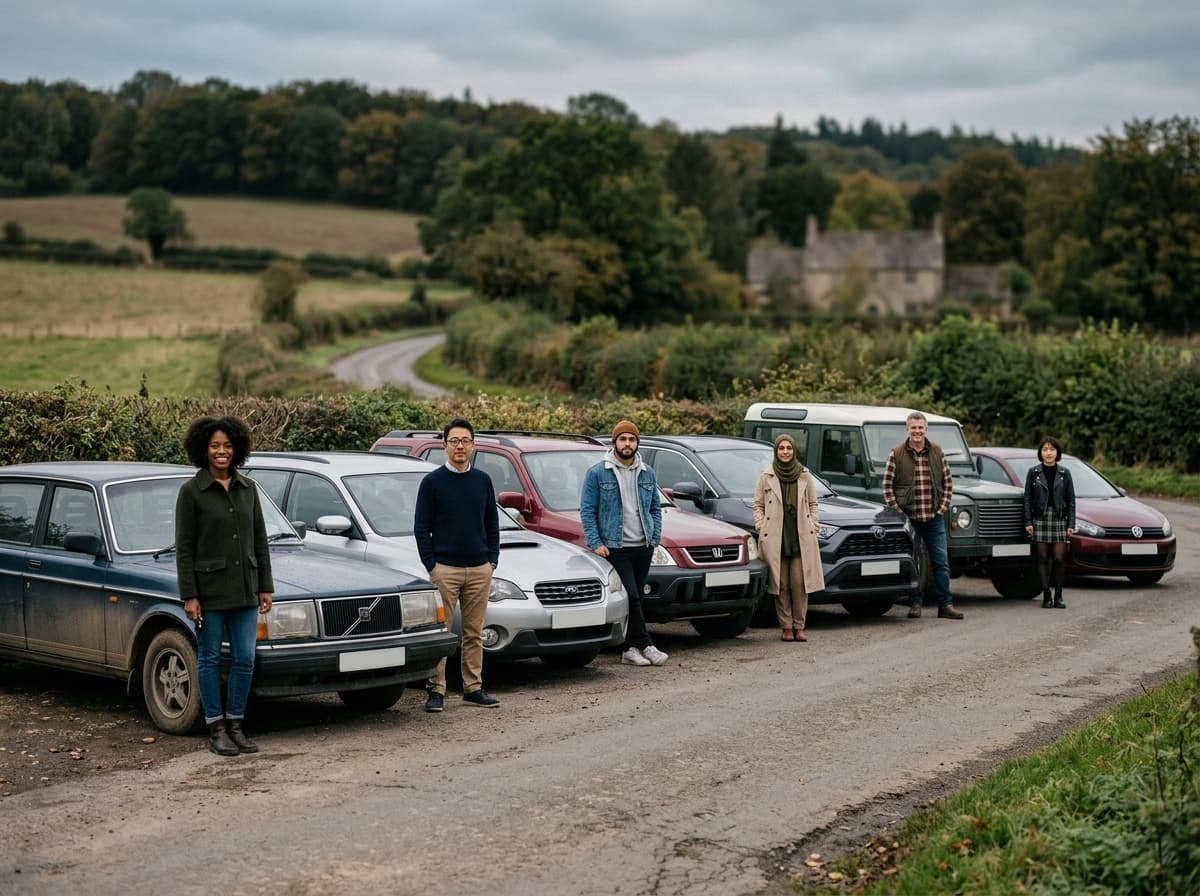
Why do young drivers pay so much?
Because the claims statistics work against them, and insurance is a statistics business. Under-25s account for a share of accidents higher than their share of the car fleet — that is the only reason, there is no moral penalty in it.
The insurer does not know you: it has neither your driving history nor your claims record. So it applies the rate of the group it assigns you to, until your own data contradicts it. That is exactly why connected-driving programmes exist: they substitute your actual behaviour for the average of your age bracket.
It is worth saying plainly: this surcharge is not permanent. Every year without an at-fault claim lowers the bonus-malus level, and most of the catch-up happens between 25 and 30. The first premium is the worst one.
What is the starting bonus-malus for a young driver?
The starting level is 11 at most Belgian insurers — 14 if the vehicle is used professionally. The Belgian scale has 23 levels (0 to 22); each level corresponds to a share of the premium, so level 11 sits in the middle.
The mechanism is simple: a full year without an at-fault claim moves you down one level, an at-fault claim moves you back up (usually by several levels). Some insurers apply an accelerated scale to young drivers — two levels down per year instead of one. Over three years the difference is far from trivial, and it does not show up in the first year's price. Worth checking in the general terms before signing; it is a clause people forget to compare.
Which Belgian insurers should a new driver compare?
Five insurers come up consistently on beginner profiles: Ethias, Belfius Direct (ex-Corona Direct), Yuzzu, P&V and AG Insurance. None is cheapest for everyone — each has an angle, and that angle is what creates the three-figure gaps.
| Insurer | Young-driver angle | Watch out for |
|---|---|---|
| Ethias | YouDrive programme: up to ~20% off depending on the driving score | What the box measures, and whether the discount is clawed back on a poor score |
| Belfius Direct | Pay-per-kilometre formula: low base plus a per-km rate | Turns against you above ~15,000 km/yr |
| Yuzzu | Fully online journey, app-based management | No broker in a branch to frame a complex file |
| P&V | Adviser network, family bundles | Compare the rate outside the family package |
| AG Insurance | Readable bonus-malus scale, wide network | Higher base rate at the start |
These lines tell you where to simulate, not what to choose. The criterion-by-criterion verdict is in our ranking of the best car insurers, and the offers go side by side on the comparator.
Should you accept a telematics box to pay less?
Yes in most cases, but only after reading the claw-back clause. Belgian connected-driving programmes — YouDrive at Ethias foremost — typically return 10 to 20% from the first year if the box confirms careful driving. On a €1,400 premium, that is €140 to €280 a year. It is the most powerful lever a beginner has.
Two questions to ask before signing. First: what exactly does the box measure? Harsh braking, acceleration, speed, driving hours, distance covered — the criteria vary, and a driver who often comes home at night does not get the same score as a daytime commuter, at equal driving quality. Second: what happens if the score is poor? Some contracts simply do not grant the discount; others claw it back. That nuance changes everything.
Liability-only, mini-omnium or full omnium when starting out?
The right level depends on the car's value, never on the driver's age. Third-party liability is mandatory in Belgium: it covers damage caused to others, and never your own vehicle.
The rule I apply: as soon as the annual omnium premium exceeds 5 to 7% of the vehicle's value, step down a level. On a first used car worth €5,000, an €800-a-year omnium means paying 16% of the asset every year to insure it — indefensible. A mini-omnium (theft, fire, glass, natural forces) at €200-300 covers the big risks without the bill.
The exception: a car bought on credit. As long as the loan runs, an omnium is justified even on a used vehicle, because an uncovered theft leaves you with the instalments and no car. That is the only case where I recommend paying more than the 5-7% rule allows.
Can you insure the car in your parents' name to pay less?
No — not if you are the main driver. It is the market's most tempting and most dangerous shortcut. Declaring a parent as the main driver when the child drives every day is a false declaration: an insurer that discovers it after a claim can reduce the payout, refuse it, and cancel the policy. You save a few hundred euros over two years and end up, one bad morning, paying a bodily-injury claim out of pocket.
What is perfectly legal, on the other hand: being declared a named secondary driver on the family car. It is even the best way in — the insurer takes it into account, the rate stays reasonable, and you start building a record. Then ask the insurer for a claims-record certificate mentioning your driving: it will follow you to your own insurer, and it is worth money.
How do you lower a young driver's premium?
Six levers, from most to least effective. They stack.
- Choose a low-powered, inexpensive car. This is lever number one, and it happens before the insurance: a 75 hp city car costs far less to insure than a 150 hp hatchback of equal value.
- Compare several insurers. The gap reaches €400 to €800 a year on a beginner profile. A simulation costs five minutes.
- Accept a telematics box, if the claw-back clause is acceptable: 10 to 20% off.
- Switch to a pay-per-kilometre formula if you drive under 8,000 to 10,000 km a year (student, remote work, second car).
- Raise the excess, provided you can absorb it. A €500 excess instead of €250 lightens the premium, but you pay it on the day of the claim.
- Step down the formula: liability plus mini-omnium rather than a full omnium, if the car's value justifies it.
What not to do: cut assistance to save €20 a year. One uncovered tow costs more than three years of the option. And never under-declare your mileage: the simulated premium drops, the quote climbs back, and the gap can be held against you after a claim.
Method and sources
The ranges quoted are orders of magnitude taken in July 2026 from the public offers and market comparisons of Belgian insurers; they do not replace a personalised quote, which depends on your vehicle, your postcode and your record. The bonus-malus rules draw on the explanations published by Belgian insurers themselves, notably P&V and AG Insurance, as well as on Assuralia's key motor liability figures. No insurer pays to appear in this article, and no link on this page is an affiliate link: we cite, we do not sell.
In summary
A young driver's premium is high, but it is negotiable — not by arguing, by comparing. Pick a modest car, get the bonus-malus descent speed in writing, test the telematics box and the pay-per-kilometre formula, and run a premium simulation with five insurers before signing. Compare the cover, not just the price: the "cover" column is the one that decides on the day of the claim. The full ranking gives you the insurer-by-insurer detail.
Profils conducteurs comparator
Compare all profils conducteurs side by side.
Compare now →
Frequently asked questions
Damien décortique le marché belge de l'assurance auto depuis plus de dix ans. Ancien gestionnaire de sinistres en compagnie, devenu analyste indépendant, il lit les conditions générales ligne par ligne, compare les primes réelles de AG, Ethias, KBC, Belfius, P&V ou Corona Direct, et teste les simulateurs du marché. Sa conviction : beaucoup de Belges surpaient leur prime ou découvrent une exclusion le jour du sinistre, faute d'avoir comparé les garanties. Sur ce site, il traduit le jargon des contrats (RC, omnium, franchise, bonus-malus) en conseils concrets, chiffrés et sans lien commercial caché.