
There is one sentence I repeat in every conversation about Belgian car insurance, and it always lands as a surprise: mandatory third-party liability compensates everyone except you. Your passengers, the pedestrian, the cyclist, the driver coming the other way — all covered. The driver of the insured vehicle, not. He is the single person excluded from the scheme, and that is precisely the gap optional cover exists to plug. What remains is working out which add-ons earn their premium line, and which ones you are already paying for elsewhere without knowing it.
Why does mandatory third-party cover not protect the driver?
Because Belgian law builds it as liability insurance, not as personal injury insurance. Third-party car cover compensates the damage you cause to others. You are not "another person" in relation to yourself.
The mechanism hardens with article 29bis of the law of 21 November 1989, which establishes automatic compensation for the bodily injuries of "vulnerable road users" — pedestrians, cyclists, passengers — by the liability insurer of the vehicle involved, regardless of fault. A highly protective regime. Except that its paragraph 2 explicitly excludes the driver of a motor vehicle and his beneficiaries from the vulnerable road user category.
In plain terms: your passenger walks away compensated from an accident you caused, you do not. Same crash, same hospital, two opposite legal regimes.
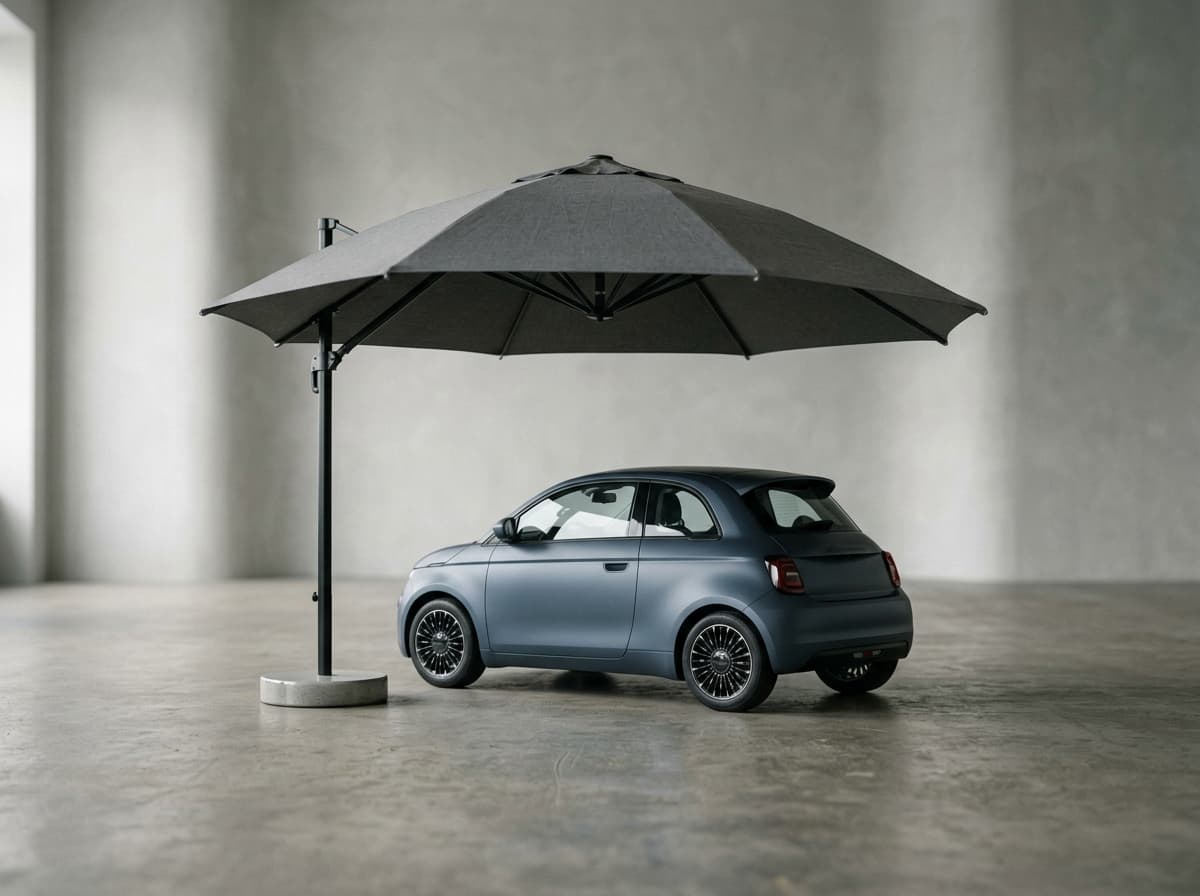
What makes the blind spot particularly expensive is that it concerns bodies, not bodywork. A full omnium will repair your car after an at-fault accident. It will not pay for eight months of incapacity for work.
What is driver cover and what does it include?
Driver cover — also called individuelle conducteur, "RC Max" or protected driver depending on the insurer — compensates your own bodily injuries whatever your role in the accident. It is the only cover that targets the gap described above directly.
Its standard perimeter on the Belgian market includes medical and hospital costs, loss of income during temporary incapacity, permanent disability calculated against a scale, and a capital sum paid to beneficiaries in the event of death. It intervenes in three configurations where nothing else applies:
- the accident for which you are at fault;
- the accident with no third party (black ice, running off the road, an animal);
- the accident with a third party who is unidentified or uninsured, pending intervention by the Belgian guarantee fund.
A fourth advantage often goes unnoticed: speed. Establishing liability for an accident takes months. Driver cover does not make its intervention conditional on that debate — it pays on the basis of your injuries, not your fault.
Is driver cover worth its price?
Yes, and it is the only one of the three optional covers I write that about without qualification. The reason lies in the nature of the risk: low frequency, potentially ruinous severity — exactly the profile insurance exists to handle.
| Situation | Liability only | Liability + omnium | Liability + driver cover |
|---|---|---|---|
| Your injuries, at-fault accident | Nothing | Nothing | Compensated |
| Your injuries, single-vehicle run-off | Nothing | Nothing | Compensated |
| Your injuries, third party at fault | Paid by third party | Paid by third party | Compensated (advance) |
| Your passengers' injuries | Covered | Covered | Covered |
| Your vehicle, at-fault accident | Nothing | Repaired | Nothing |
Two rows of that table stay empty across the first two columns. They are the two most frequent bodily-injury scenarios for a driver. In practice, for an average driver: driver cover is the first box to tick, before even discussing the omnium level.
Legal expenses cover or legal defence: what is the difference?
Legal defence is included in your liability policy and paid by the insurer that compensates the other party; legal expenses cover is a separate contract that funds your rights. The conflict of interest in the first is structural, not accidental.
When a dispute pits your liability insurer against a third party, that insurer has a direct financial stake in the outcome: the lighter the liability attributed to you, the less it pays. As long as your interests and its own converge, all is well. The day they diverge — contesting a share of liability, disagreeing with an assessment, taking action against a garage — you no longer have anyone.
Legal expenses cover is often taken out with a separate company, and that is deliberate. On the Belgian market, motoring legal expenses cover frequently sits with a specialist: DAS, ARAG, Providis (AG Insurance group), Legal Village (AXA), Euromex (Baloise) or Arces (Vivium and P&V). Ethias, Belfius, Argenta and Yuzzu also market their own formulas.
How much does motoring legal expenses cover cost in Belgium?
As an extension to the car policy, budget €30 to €70 a year in most cases. It is the best cost-to-protection ratio in the entire contract, and that is not a figure of speech: a few dozen euros against lawyer's fees that start in the thousands.
| Formula | Observed price | Perimeter |
|---|---|---|
| Extension to the car policy | €30 – €70/year | Disputes linked to the vehicle and to traffic |
| Specialist entry-level policy | €60 – €90/year | Criminal and civil defence, recourse, third-party insolvency |
| All-purpose legal expenses policy | €200 – €250/year | Motoring + private life, neighbours, work, consumer disputes |
Three lines to check before signing, in this order. The intervention ceiling per dispute: entry-level formulas often cap around €100,000, extended ones reach €200,000. The minimum dispute threshold, below which the insurer does not step in — a €400 dispute frequently falls under the radar. And the free choice of lawyer, a legal right in Belgium as soon as judicial proceedings are opened, but whose practical terms (fee caps per procedural act) vary from contract to contract.

Is roadside assistance worth taking out?
It depends entirely on what you already have — and this is the cover where duplication is most common. Before ticking the box, check your premium bank card, your family assistance policy, your motoring club subscription and any cover attached to your vehicle if it is still under manufacturer warranty.
Once that sorting is done, assistance is judged on three lines and not on its price:
The distance threshold. Many contracts only intervene beyond a certain distance from home. Logical from the insurer's point of view, absurd from the policyholder's: the most probable breakdown is the morning one, on your own driveway, when you need to leave.
Simple mechanical breakdown. Some formulas only cover accidents, not breakdowns. Flat battery, running out of fuel, keys locked inside: those three classics are included in the good formulas and excluded from the bad ones.
The replacement vehicle. Its duration, its category and its trigger (accident only, or breakdown too) make the difference between a decorative cover and a useful one.
On price, the orders of magnitude observed in Belgium remain modest: Ethias for instance prices the second insured vehicle on its breakdown cover at around €30 a year, for a total around €185 a year on two cars. AG Insurance markets its offer as Top Assistance, and Yuzzu sells it as an option on its car policy.
How should you price these add-ons on your own policy?
By systematically asking for a quote with and without each cover, on the same basis. Insurers happily present "comfort" or "premium" packs that stack the three add-ons on top of the omnium: convenient, but it stops you seeing what each brick actually costs.
Three questions to put in writing to every insurer, valid at AG, Ethias, KBC, Belfius Direct, P&V, Yuzzu or AXA:
- What is the insured capital of the driver cover, and against which scale is permanent disability calculated?
- What is the intervention ceiling of the legal expenses cover, and what is the minimum dispute threshold?
- Does assistance intervene at zero kilometres from home, and does it cover simple mechanical breakdown?
Three answers, three table rows — and the ranking often shifts compared with the advertised premium. The criterion-by-criterion detail is in our ranking of the best car insurers, and the formulas go side by side on the comparator.
Method and sources
The price ranges quoted are orders of magnitude taken in July 2026 from the public offers and market comparisons of Belgian insurers; they do not replace a personalised quote, which depends on your vehicle, your postcode and your record. The vulnerable road user compensation regime and the exclusion of the driver draw on the text of the law of 21 November 1989 on compulsory liability insurance for motor vehicles, and the cover explanations on documents published by Belgian insurers themselves. No insurer pays to appear in this article, and no link on this page is an affiliate link: we cite, we do not sell.
In summary
Optional cover is not a set of comfort extras, it is a set of patches over specific holes. The most serious of those holes is a bodily one and concerns the driver himself: Belgian law excludes him from the protective vulnerable road user regime, and only driver cover catches him. Legal expenses cover solves a different but equally structural problem — the insurer that defends you while also paying the bill. Assistance should be taken out after an inventory of what you already hold. Compare the cover, not just the price: on these three lines the premium gap is marginal and the protection gap is not. Run a premium simulation with and without add-ons, and the full ranking will give you the insurer-by-insurer detail.
Garanties & formules comparator
Compare all garanties & formules side by side.
Compare now →
Frequently asked questions
Damien décortique le marché belge de l'assurance auto depuis plus de dix ans. Ancien gestionnaire de sinistres en compagnie, devenu analyste indépendant, il lit les conditions générales ligne par ligne, compare les primes réelles de AG, Ethias, KBC, Belfius, P&V ou Corona Direct, et teste les simulateurs du marché. Sa conviction : beaucoup de Belges surpaient leur prime ou découvrent une exclusion le jour du sinistre, faute d'avoir comparé les garanties. Sur ce site, il traduit le jargon des contrats (RC, omnium, franchise, bonus-malus) en conseils concrets, chiffrés et sans lien commercial caché.